Jacob Steals Esau’s Blessing

TLDR: A guide for having a family discipleship time on Genesis 27–28 based on the ACT Bible Study Method.


Act 3: God Promises Jesus
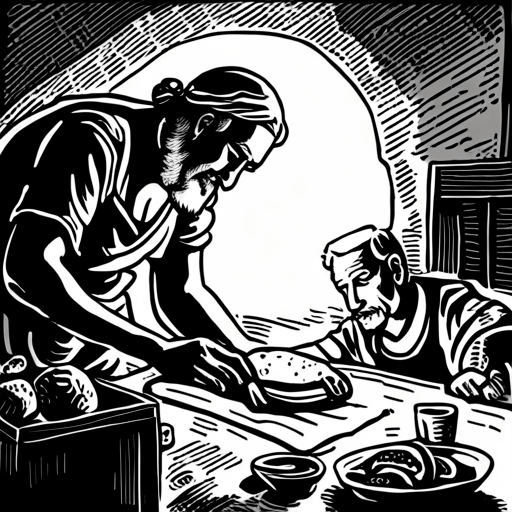
Scene 14: Jacob Steals Esau’s Blessing
Genesis 27:1—28:9

Analyze the Passage

Step 1: Introduce the Passage

Genesis was written by Moses sometime between 1445–1405 BC to help the Israelites leaving Egypt understand their history with God. It’s one of the five books of the Law that Moses wrote, which we also call the Torah, or the Pentateuch, which means “five books.”

Today’s true story continues the story of Jacob and shows more of how he wasn’t the first person we’d choose to become the father of the twelve tribes of Israel. This story is in Act 3: God Promises Jesus.

Step 2: Read the Passage

Genesis 27:1—28:9

Step 3: Summarize the Passage

When Isaac was old and couldn’t see well, he called for Esau to hunt for some wild game, make him a meal, and bring it to him so that he could bless him. But Rebekah was listening and told Jacob to get two goats from the flock, and then she would make the meal and he would take it to Isaac to be blessed instead. Jacob asked about Esau being hairy, and Rebekah had him wear Esau’s clothes and put animal skins on his arms to appear to be hairy.

When Jacob, pretending to be Esau, took the food to Isaac, Isaac wondered how his son caught an animal so quickly, touched his arm, said the voice sounded like Jacob, and asked if it really was Esau. Jacob lied each time, and Isaac ended up blessing Jacob thinking he was Esau.

When Jacob left Isaac, Esau came in and they realized what had happened. Esau asked Isaac to bless him too, but Isaac could not. Esau became furious at Jacob for taking the birthright and now stealing the blessing. Esau hated Jacob and determined to kill him after Isaac died.

When Rebekah learned of Esau’s anger, she told Jacob that he needed to leave at once, going to Laban’s house to find a wife. So, Isaac agreed to send Jacob to Laban’s house to find a wife and Esau stayed there and married a Canaanite woman.

Step 4: Interrogate the Passage

Questions you and your family ask might include:

  • What did it mean for Isaac to bless Esau?
  • Why did Rebekah want Jacob to get the blessing instead of Esau?
  • Was the blessing that Isaac gave part of the covenant God had made with Abraham?
  • How did Rebekah hear of Esau’s anger?
  • Why didn’t Isaac want his sons to marry a Canaanite?
  • Why did Esau marry a Canaanite woman?
Step 5: Wonder about the Passage

Wonder statements you and your family make might include:

  • I wonder what the meal was that Isaac liked.
  • I wonder if Isaac ever really thought it was Esau with him the first time.
  • I wonder if Jacob felt guilty as he was tricking his father.
  • I wonder if Rebekah didn’t realize Esau would be so angry.
  • I wonder if Isaac and Esau learned Rebekah had played a part in the trickery.

Connect the Passage to Christ

Step 6: Find the World in Front of Text

This is another story that shows us how the world is not like it is supposed to be. Here, we see a family torn apart because of the sins of favoritism, lying and deception, and anger. This is far from the world that God intends. He designed families, especially, to be filled with love, truth, and peace.

Step 7: Find the World of Jesus of the Text

This is a family that surely needed an infusion of forgiveness and generosity especially. Ideally, they would have put an end to the favoritism and trickery, but a heart of forgiveness would have also greatly helped them avoid the strife that plagued them for years after this. Jesus shows us the better way; a way that is marked by radical forgiveness.

Likewise, the family was greedy. Jacob wanted what wasn’t his, and his mother wanted it for him too. Instead, they should have been generous, giving what they had to support Esau. Jesus shows us a better way in this regard too, as he lived with great generosity for the good of others, not for himself.


Translate It to Your Context

Step 8: Connect the World of Jesus of the Text to Your World

Who do you need to forgive? Who has wronged you in a big way or a small way that you can truly forgive? How can you let that person know they are forgiven? Who might you ask to forgive you for something you’ve done wrong?

How can you be amazingly generous with someone this week to show them Jesus? Who might you be generous toward, how might you do it, and when might you do it?


NEXT: Act 3: God Promises Jesus; Scene 15: Jacob Has a Dream (Genesis 28:10–22)

Learn more about this family discipleship method here.
2024 KidzMatter Breakouts

TLDR: The slide decks for two breakouts presented at the KidzMatter conference in Evansville, Indiana September 24 and 26.

Developing a New Ministry Scorecard

Tuesday, September 24, 2024 (5 pm)

For 2,000 years, our calling remains unchanged: to share the unchanging gospel. Amidst cultural shifts, it’s crucial to adapt our approach while preserving our message, starting with redefining “success” metrics.

Building a Family Discipleship Culture

Thursday, September 26, 2024 (12:30 pm)

Transform your KidMin into a faith powerhouse! Join us to discover strategies for building a vibrant family discipleship culture where every member thrives spiritually. Leave equipped with practical tools to cultivate a lasting legacy of faith at home.

Jacob Takes the Family Birthright

TLDR: A guide for having a family discipleship time on Genesis 25 based on the ACT Bible Study Method.


Act 3: God Promises Jesus
Scene 13: Jacob Takes the Family Birthright
Genesis 25:19–34

Analyze the Passage

Step 1: Introduce the Passage

Genesis was written by Moses sometime between 1445–1405 BC to help the Israelites leaving Egypt understand their history with God. It’s one of the five books of the Law that Moses wrote, which we also call the Torah, or the Pentateuch, which means “five books.”

Today’s true story is one that introduces us to Jacob, Isaac’s son and the one who would become the father of the twelve tribes of Israel. This story is in Act 3: God Promises Jesus.

Step 2: Read the Passage

Genesis 25:19–34

Step 3: Summarize the Passage

When Isaac was 40 years old, he married Rebekah, who couldn’t have children. But Isaac prayed for Rebekah and she became pregnant. She had twins in her womb, and they struggled with each other. When she asked God why, he said it was because they were two separate nations, one would be stronger, and the older would serve the younger.

The first boy born was Esau, he was reddish and hairy. The second boy was Jacob; he came out holding Esau’s heel.

When they were grown, Esau became a hunter and Jacob lived in the tents. Isaac loved Esau more; Rebekah loved Jacob more.

One day, Jacob made some stew while Esau was in the fields. Esau came in starving and asked for some stew. But Jacob made him sell his birthright for it. Esau said because he was about to die from hunger, he may as well and agreed.

Step 4: Interrogate the Passage

Questions you and your family ask might include:

  • Why did so many women have trouble having children in Genesis?
  • How did Rebekah hear from the Lord?
  • What did God mean by the children being two nations?
  • What did it mean that Jacob lived in tents?
  • Why didn’t Jacob just give his hungry brother some stew?
  • What is a birthright?
  • Did Esau really think he was about to die?
  • What does it mean that Esau despised his birthright?
Step 5: Wonder about the Passage

Wonder statements you and your family make might include:

  • I wonder how long Isaac prayed for Rebekah.
  • I wonder what the children struggling in her womb felt like.
  • I wonder why the older would serve the younger.
  • I wonder what Esau looked like all reddish.
  • I wonder if everyone knew Isaac and Rebekah had favorites.
  • I wonder if the stew as good enough to be worth it to Esau.

Connect the Passage to Christ

Step 6: Find the World in Front of Text

This passage shows us more of how the world shouldn’t be. While we see Isaac praying for Rebekah and Rebekah going to God to try to make sense of things, beyond that, we more see how this family wasn’t living as God designed for families to be.

First, we see the twins struggling in the womb, and while we cannot be sure what that means, we know this was a picture of how their relationship would be pretty much their entire lives.

We also see favoritism in this family—a pattern that began with Abraham and Sarah and will continue through Jacob and his wives and children. Favoritism, as we will see, is hurtful and harmful. God calls on us to love others instead.

Finally, we see Jacob taking advantage of a situation to exploit his brother. Instead of loving his brother and being glad to give him food, he made him trade something of great value—an extra portion of the family inheritance—for a single meal.

Step 7: Find the World of Jesus of the Text

As we focus especially on Jacob and Esau’s interaction, we see that Jacob lacked compassion and generosity. He failed to lovingly care for his brother when he was in need. And he failed to give to Esau freely and generously. Instead, he leveraged the situation to get something he wanted from Esau.

Jesus, of course, shows us a different picture, a better picture, of what it looks like to live with compassion and generosity for others. Jesus cared for others during his time on earth and provided what they needed without cost. He was generous with all he had, even giving up his life for us.


Translate It to Your Context

Step 8: Connect the World of Jesus of the Text to Your World

How can you show others compassion this week? How can not only care about others, but act on that care by doing whatever you can for them, especially if they are in need. What can you do with your time, money, and possessions to help others in need?

How can you be amazingly generous with someone this week to show them Jesus? Who might you be generous toward, how might you do it, and when might you do it?


NEXT: Act 3: God Promises Jesus; Scene 14: Jacob Steals Esau’s Blessing (Genesis 27:1—28:9)

Learn more about this family discipleship method here.

Isaac and Abimelech

TLDR: A guide for having a family discipleship time on Genesis 26 based on the ACT Bible Study Method.


Act 3: God Promises Jesus
Scene 12: Isaac and Abimelech
Genesis 26:1–33

Analyze the Passage

Step 1: Introduce the Passage

Genesis was written by Moses sometime between 1445–1405 BC to help the Israelites leaving Egypt understand their history with God. It’s one of the five books of the Law that Moses wrote, which we also call the Torah, or the Pentateuch, which means “five books.”

Today’s true story might sound a little familiar at first. That’s because Isaac does something just like his father had done not once, but twice. So this is the third time we see the same thing happen. This story is in Acts 3: God Promises Jesus.

Step 2: Read the Passage

Genesis 26:1–33

Step 3: Summarize the Passage

When another famine came, Isaac went to King Abimelech at Gerar. There, God told him not to go to Egypt, but stay where he was and God would bless him and make good on the promises he had first made to Abraham. So, Isaac stayed.

When the men of the area asked about Rebekah, Isaac was afraid they would kill him and take her, so he said she was his sister. But one day, Abimelech saw Isaac and Rebekah embracing and called for him to ask why he had lied about her. Abimelech ordered that no one could touch Rebekah.

When Isaac planted, God blessed him and he produced many crops and became wealthy. He also had many animals and servants. But the Philistines became jealous and filled his wells with dirt.

King Abimelech told Isaac to leave because he had become too wealthy, so he did. He went to where Abraham had lived and reopened his old wells. Some of the locals argued that the wells were theirs, so Isaac dug two more wells.

Then, Isaac went to Beer Sheba and God appeared to him and promised to bless him again. Isaac built an altar and worshiped God there. His servants dug another well.

Then, King Abimelech and two others came to Isaac asking him to make a treaty together. So Isaac made a feast and they made a treaty together. Then, Isaac’s servants came and told him they found water again.

Step 4: Interrogate the Passage

Questions you and your family ask might include:

  • Was this the same Abimelech as before?
  • Why did God not want Isaac to go to Egypt?
  • Why did Isaac lie about his wife being his sister and not trust God?
  • Why was Abimelech afraid of someone taking Rebekah as a wife?
  • Why did the Philistines fill in Isaac’s wells?
  • Why does this story talk about wells so much?
Step 5: Wonder about the Passage

Wonder statements you and your family make might include:

  • I wonder if Isaac wanted to go to Egypt.
  • I wonder if Isaac knew that his father had said Sarah was his sister too.
  • I wonder if Abimelech knew that God was with Isaac.
  • I wonder if Isaac was okay with moving so much.

Connect the Passage to Christ

Step 6: Find the World in Front of Text

This part of Isaac’s life couldn’t have been easy. He was forced to move from place to place and faced opposition where he went. However, for the most part, we see him trusting and obeying God. God told him not to go to Egypt, and Isaac listened. Several times God met with him and reminded him of his promises to bless him. And God surely blessed Isaac in this account. This is what God wants from us—he wants his people to follow him, trust him, and obey him no matter what.

But Isaac’s trust wasn’t perfect. Like his father twice before him (Gen. 12:10–20; 20:1–18), Isaac lied about his wife being his sister, afraid that he would be killed by others. It’s possible Isaac didn’t know his father had done this. It’s also possible he had learned it from him. Either way, it shows a shared lack of faith and trust in God. How could God bless Isaac if he were dead? This reminds us of our need to cast off doubt and to trust in God no matter what.

Step 7: Find the World of Jesus of the Text

When we think of obedience, of course we should think of Jesus’ perfect obedience. Isaac obeyed God by not going to Egypt; Jesus obeyed by coming to earth. God blessed Isaac because of his obedience; God blessed us because of Jesus’ obedience.

Another thread we see running through this story is hospitality and lack of hospitality. Abimelech allowed Isaac to settle in his land. But then when Isaac became too strong, Abimelech forced him to leave. Others became jealous of Isaac and filled his wells—an act of gross inhospitality. But Isaac seemed to resist the urge to retaliate. Finally, Abimelech came back to Isaac and asked for a treaty that ensured mutual hospitality. Like obedience, we see a mixture of what God wants and what has been broken because of sin. God intends for us to offer unlimited hospitality to others, even at our own expense. He wants us to welcome others, to care for them, and to treat them like family. This is what Jesus has done for us. He gave up his life to welcome us into God’s family.


Translate It to Your Context

Step 8: Connect the World of Jesus of the Text to Your World

How can you show someone hospitality this week? How can you treat someone with friendship, love, and kindness? Think about people who you know of or barely know, especially anyone who seems like he or she might need a friend. What will you do to be a friend to them?

How can you obey God this week, in big ways and small ways, so that people might see Jesus in you? Think about all the places you will be this week and what you will do. How can you obey God and people he has placed in authority with joy?


NEXT: Act 3: God Promises Jesus; Scene 13: Jacob Takes the Family Birthright (Genesis 26:1–33)

Learn more about this family discipleship method here.
Isaac and Rebekah

TLDR: A guide for having a family discipleship time on Genesis 24 based on the ACT Bible Study Method.


Act 3: God Promises Jesus
Scene 11: Isaac and Rebekah
Genesis 24:1–67

Analyze the Passage

Step 1: Introduce the Passage

Genesis was written by Moses sometime between 1445–1405 BC to help the Israelites leaving Egypt understand their history with God. It’s one of the five books of the Law that Moses wrote, which we also call the Torah, or the Pentateuch, which means “five books.”

Today’s true story jumps ahead in time from the last one. Abraham’s wife Sarah has died and Isaac is grown up by now. It’s time for him to find a wife, especially since he is the chosen son to keep Abraham’s family growing. This story is in Act 3:God Promises Jesus.

Step 2: Read the Passage

Genesis 24:1–67

Step 3: Summarize the Passage

Abraham was now quite old. He made one of his servants promise that he would not find Isaac a wife from the people where they lived, but rather that he would find one from his home country. The servant asked if no woman was willing to return from that home country, should he take Isaac there, but Abraham said not to do that. If no woman was willing to return, the promise was ended.

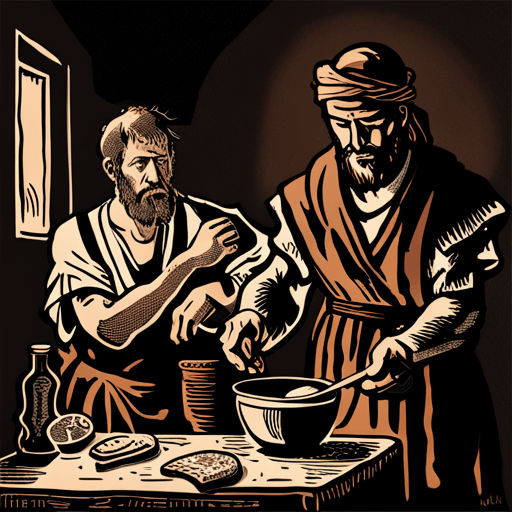
The servant then took ten camels with him and went to Abraham’s home country. He arrived by a well and prayed that God would show him what woman would be a good wife for Isaac. His test was that the woman who offered to water his camels would be the one.

Before he finished praying, Rebekah came to the well. When the servant asked for a drink of water, she offered to water his camels. After the camels were done drinking, the servant gave Rebekah some gold jewelry and asked if he could spend the night in her family’s home. At this point, the servant knew this was the right woman.

When the servant arrived at the house, he met Rebekah’s brother, Laban. He then told them all about why he was there and his test. He then asked if Rebekah would go back with him, and Laban and Rebekah both agreed.

When they had returned, the servant took Rebekah to Isaac and he explained all that had happened. Isaac married Rebekah and loved her, and she was a comfort to him after his mother’s death.

Step 4: Interrogate the Passage

Questions you and your family ask might include:

  • Why didn’t Abraham want Isaac to marry a woman from where they lived?
  • Why didn’t Abraham want Isaac to travel to his home country?
  • Why did the servant make watering the camels a test?
  • Why were Rebekah, Laban, and their family so eager to welcome the servant?
  • Why did Rebekah’s family want her to stay with them longer before going?
  • Why did Rebekah put a veil on when she saw Isaac?
Step 5: Wonder about the Passage

Wonder statements you and your family make might include:

  • I wonder how old Isaac was?
  • I wonder why a servant needed to find a wife for Isaac.
  • I wonder how much water Rebekah had to draw for the camels.
  • I wonder how Rebekah and her family felt about all this.
  • I wonder what it was like for Rebekah to leave her home and family.
  • I wonder what it was like when Rebekah and Isaac met.

Connect the Passage to Christ

Step 6: Find the World in Front of Text

In this story, we see amazing trust in God, hospitality, kindness, and love. It gives us a good picture of how God intended his people to live together. We see Abraham caring for his son, Isaac. We see Abraham’s servant agreeing to make an important promise. We see that servant turning to God for guidance. We see Rebekah showing amazing hospitality—watering that many camels wasn’t easy—and kindness. And we see Rebekah and her family seeing God’s hand in what had happened and following in obedience.

None of these people were perfect, of course. We’ve seen Abraham make mistakes, we’ll see Isaac make one soon, and we’ll see Laban make more later. But in this account, they give us a wonderful picture of people living together in harmony, following God’s guidance. And that’s exactly what God intended.

Step 7: Find the World of Jesus of the Text

Two marks that stand out of this account is love and hospitality. Love is what drove Abraham to send his servant to get a wife for Isaac. Love is what prompted the servant to make the promise and go. And love is what cemented Isaac and Rebekah together. But love for God undergirds it all.

We also see tremendous hospitality in this story. The culture of that day valued hospitality—even to a stranger like this. But Rebekah and her family seemed to go above and beyond. They went the extra mile instead of doing the minimum.

Both of these characteristics remind us of Jesus who displays perfect love for God and us and who lived on earth with amazing hospitality—always seeking to make strangers friends.


Translate It to Your Context

Step 8: Connect the World of Jesus of the Text to Your World

How can you show someone hospitality this week? How can you treat someone with friendship, love, and kindness? Think about people who you know of or barely know, especially anyone who seems like he or she might need a friend. What will you do to be a friend to them?

Who can you show the love of Jesus to this week? What are some ways you can love your family, friends, neighbors, and even strangers with the amazing and powerful love of Jesus?


NEXT: Act 3: God Promises Jesus; Scene 12: Isaac and Abimelech (Genesis 26:1–33)

Learn more about this family discipleship method here.

Family Discipleship that Works Updates

TLDR: Family Discipleship that Works is due to release October 8, 2024, and things are moving along for that to happen. I received my advance copies and I was recently able to contribute a related post at The Pastor’s Workshop.

Things are moving right along with the release of Family Discipleship that Works, slated for October 8. As we draw close, this means it is peak “get the word out” season. Creating awareness of a book, and, for lack of a better word, buzz around its release is really helpful to get the flywheel moving. So, podcasts, blog posts, and speaking opportunities are at the top of the agenda.

The Pastor’s Workshop Blog Post

I was so grateful to have the opportunity to write a blog post for “The Pastor’s Workshop.” The post is called “A New Direction for Family Discipleship” and is based on some of the major beats of the book. You can read that and tons of other content here: https://thepastorsworkshop.com/blog/family-discipleship.

Unboxing

Did you really write a book if you don’t post an unboxing video? I don’t think so. While this wasn’t something I was most comfortable doing, it’s kind of one of those fun, expected things that go along with getting a book out into the wild.

One thing I didn’t mention in the video is that the cover is one of those textured ones; it feels nice!

Isaac Is Nearly Sacrificed

TLDR: A guide for having a family discipleship time on Genesis 22 based on the ACT Bible Study Method.


Act 3: God Promises Jesus
Scene 10: Isaac Is Nearly Sacrificed
Genesis 22:1–19

Analyze the Passage

Step 1: Introduce the Passage

Genesis was written by Moses sometime between 1445–1405 BC to help the Israelites leaving Egypt understand their history with God. It’s one of the five books of the Law that Moses wrote, which we also call the Torah, or the Pentateuch, which means “five books.”

Today’s true story is a troubling one, at least at first. After waiting so many years for a son to be born, God tells Abraham he is to sacrifice that son. Why would God want that? But in the end, we’ll understand what God was doing. This story is in Act 3: God Promises Jesus.

Step 2: Read the Passage

Genesis 22:1–19

Step 3: Summarize the Passage

After Isaac was born, God tested Abraham. He told Abraham to take Isaac to a mountain top and offer him as a sacrifice to God. So, early the next morning, Abraham got up and began the journey with Isaac, two servants, and the wood for the burnt offering.

Three days later, they arrived at the mountain and Abraham and Isaac, who carried the wood, went up the mountain. But just as Abraham was about to sacrifice Isaac, the angel of the Lord stopped him. The angel told Abraham not to harm Isaac. God had seen that Abraham was faithful.

Then, Abraham saw a ram caught in some bushes and he sacrificed it to God. After that, the angel called out to Abraham and repeated the promises God had made to him—to bless him and grow his family.

Step 4: Interrogate the Passage

Questions you and your family ask might include:

  • Why did God want to test Abraham?
  • Where is Moriah?
  • Why did Abraham take wood with him?
  • How did Abraham know which mountain was the right one?
  • Why did Abraham tell the servants that he and Isaac would return?
  • How old was Isaac?
  • What did Abraham mean when he said God would provide a lamb?
Step 5: Wonder about the Passage

Wonder statements you and your family make might include:

  • I wonder how Abraham felt when God told him to sacrifice Isaac.
  • I wonder why Abraham left so quickly.
  • I wonder what that three-day trip was like.
  • I wonder if Isaac willingly was tied up on the altar.
  • I wonder how Isaac felt.
  • I wonder how Abraham felt when the angel told him to stop.
  • I wonder what it was like for Abraham and Isaac to walk down the mountain.

Connect the Passage to Christ

Step 6: Find the World in Front of Text

This is the first time the word love is used in the Bible. It was right for Abraham to love Isaac. But God’s test was if Abraham loved him even more. God wanted to see if Abraham loved him enough to obey him—even to do something that made absolutely no sense and was perhaps the hardest thing ever to do.

This is the world God designed. He designed it to be one in which we love him far and above anything else and in which we obey him completely. It is unlikely that God would have had Abraham follow through on sacrificing Isaac. Child sacrifice is condemned by God in the Bible. But if Abraham had anything in his life that was an idol, it would have been Isaac. Abraham shows us, though, that it’s right to love good things from God as much as we can, as long as that love is never greater than our love for God.

Step 7: Find the World of Jesus of the Text

This story is often seen as a powerful picture of what God has done for us. Just like Abraham was a loving father who was willing to sacrifice his son, God is the loving Father who did sacrifice his Son. And just as Isaac was the obedient son who carried the wood for the sacrifice up the mountain, Jesus was the obedient Son who carried the wooden cross for his sacrifice up Calvary. In the end, God provided a substitute to be sacrificed to spare Isaac, but Jesus became the substitute for us.

As amazing as that picture is, we can’t miss how Jesus loves the Father and obeyed him perfectly while he was on earth. Jesus shows us what loving obedience is to look like.


Translate It to Your Context

Step 8: Connect the World of Jesus of the Text to Your World

Who can you show the love of Jesus to this week? What are some ways you can love your family, friends, neighbors, and even strangers with the amazing and powerful love of Jesus?

How can you obey God this week, in big ways and small ways, so that people might see Jesus in you? Think about all the places you will be this week and what you will do. How can you obey God and people he has placed in authority with joy?


NEXT: Act 3: God Promises Jesus; Scene 11: Isaac and Rebekah (Genesis 24:1–67)

Learn more about this family discipleship method here.

Isaac Is Born

TLDR: A guide for having a family discipleship time on Genesis 21 based on the ACT Bible Study Method.


Act 3: God Promises Jesus
Scene 9: Isaac Is Born
Genesis 21:1–21

Analyze the Passage

Step 1: Introduce the Passage

Genesis was written by Moses sometime between 1445–1405 BC to help the Israelites leaving Egypt understand their history with God. It’s one of the five books of the Law that Moses wrote, which we also call the Torah, or the Pentateuch, which means “five books.”

Today’s true story is a festive one, at least for the most part. Several stories after God promised Abraham and Sarah a son, this one describes how that boy—Isaac—is born at last. But once Isaac is born, Abraham and Sarah do something quite unkind to another child and his mother. This story is in Act 3: God Promises Jesus.

Step 2: Read the Passage

Genesis 21:1–21

Step 3: Summarize the Passage

Just like God had promised, Sarah became pregnant and gave birth to a son. They named him Isaac. Abraham obeyed Gods instruction and circumcised Isaac when the child was eight days old. Abraham was 100 years old.

Sarah said that God had made her laugh and that others would laugh with her. She couldn’t believe that she and Abraham could have a child at their age.

Later, when Isaac was weaned, they made a feast to celebrate but Sarah saw that Ishmael, Hagar’s son, was mocking. She told Abraham to throw out Hagar and Ishmael. Abraham was not happy with Sarah’s desires, but God told him that he would provide for Ishmael. So the next morning, Abraham sent Hagar and Ishmael away.

Hagar and Ishmael wandered in the wilderness and when they were out of water, she placed Ishmael under a shrub and went away from him because she didn’t want to watch him die. She sat and cried.

But the angel of God called Hagar and told her not to be afraid. She should get Ishmael and take him by the hand. Hagar then saw a well and they had plenty to drink.

God was with Ishmael and he grew. He became an archer and he married an Egyptian.

Step 4: Interrogate the Passage

Questions you and your family ask might include:

  • Why did Sarah laugh?
  • How old was a child when he was weaned?
  • Why did Sarah’s demand displease Abraham?
  • Why would God allow Hagar to be sent away?
  • How was Hagar unable to see the well before?
Step 5: Wonder about the Passage

Wonder statements you and your family make might include:

  • I wonder how Sarah responded when she learned she was pregnant.
  • I wonder if Sarah remembered how she had laughed at God a year before.
  • I wonder who and why Ishmael mocked.
  • I wonder why Hagar wandered in the wilderness.

Connect the Passage to Christ

Step 6: Find the World in Front of Text

This story reminds us once again of God’s faithfulness and his provision for his people. He had promised a son, and even if it took 25 years for Isaac to be born, he was. Sarah’s laughter of doubt turned into laughter of joy. While we also see an example of obedience, in Abraham circumcising Isaac and then later listening to God’s instructions concerning Hagar and Ishmael, two bigger parts of this story show us how the current world is not as it should be.

First, we see a lack of compassion from Sarah, especially, and Abraham, to a degree, toward Hagar and Ishmael. Sarah had attempted to send Hagar off before, and here, she does it again. She had no care for her handmaid and the son she had had with Abraham. While Abraham was unhappy with Sarah’s demands, and God told him to do it, Abraham still sent Hagar and Ishmael away. Which takes us to the second way we see the brokenness in our world: a lack of generosity.

Even if Abraham couldn’t be faulted for sending Hagar and Ishmael away because God had sanctioned it, we have to wonder why he didn’t provide them with more than just some food and water. He was extremely wealthy. Why not give her more along with an animal or two to carry it? Or perhaps even a servant or two?

God had been abundantly compassionate toward Abraham and Sarah and generous in giving them so much wealth and now a son. But in this episode, we see a lack of both of those.

Step 7: Find the World of Jesus of the Text

The lack of compassion and generosity from Abraham and Sarah toward Hagar and Ishmael, leaving them to die of hunger and thirst in the wilderness, reminds us of the compassion and generosity of Jesus—namely when he fed the multitudes. Unlike Abraham, Jesus had compassion on those who were hungry and he provided an abundance of food for them when they were a ways from a town where they could have gotten food. Jesus demonstrates his compassion and generosity in a far greater way by providing for our spiritual hunger and thirst, namely by laying down his life so we can be forgiven from sin.


Translate It to Your Context

Step 8: Connect the World of Jesus of the Text to Your World

How can you show others compassion this week? How can not only care about others, but act on that care by doing whatever you can for them, especially if they are in need. What can you do with your time, money, and possessions to help others in need?

How can you be amazingly generous with someone this week to show them Jesus? Who might you be generous toward, how might you do it, and when might you do it?


NEXT: Act 3: God Promises Jesus; Scene 10: Isaac Is Nearly Sacrificed (Genesis 22:1–19)

Learn more about this family discipleship method here.
Abraham and Abimelech

TLDR: A guide for having a family discipleship time on Genesis 20 based on the ACT Bible Study Method.


Act 3: God Promises Jesus
Scene 8: Abraham and Abimelech
Genesis 20:1–18

Analyze the Passage

Step 1: Introduce the Passage

Genesis was written by Moses sometime between 1445–1405 BC to help the Israelites leaving Egypt understand their history with God. It’s one of the five books of the Law that Moses wrote, which we also call the Torah, or the Pentateuch, which means “five books.”

Today’s true story might sound familiar, because many of its details are. It shares much in common with Genesis 12:10–20, when Abraham and Sarah lived in Egypt for a time. This story is in Act 3: God Promises Jesus.

Step 2: Read the Passage

Genesis 20:1–18

Step 3: Summarize the Passage

Abraham and Sarah went to live in Gerar. There, he said that Sarah was his sister, so Abimelech, the king of Gerar, took Sarah from him. God, though, gave Abimelech a dream saying he would die because he took someone’s wife. Abimelech asked why God would do that since Abraham said Sarah was his sister and Sarah had said the same. God told him that he knew that, which is why he wasn’t dead yet. Instead, if he gave Sarah back to Abraham, Abraham would pray for him and spare his life.

The next morning, he called for Abraham and asked why he had done this to him. Abraham responded that it was because he thought that no one feared God there and they would kill him and take Sarah. Furthermore, Abraham said she was his half-sister, so they hadn’t lied.

Abimelech gave Abraham Sarah back, along with possessions and silver. Abraham prayed to God, and God spared Abimelech and healed the people.

Step 4: Interrogate the Passage

Questions you and your family ask might include:

  • Why did Abraham and Sarah go to Gerar?
  • Why would God have killed Abimelech if he didn’t know Sarah was Abraham’s wife?
  • Why did Abimelech give Abraham possessions and silver after he had been wronged by him?
Step 5: Wonder about the Passage

Wonder statements you and your family make might include:

  • I wonder why people kept trying to take Sarah, even though she was older.
  • I wonder what Abimelech’s dream was like.
  • I wonder how Sarah felt about saying she was Abraham’s sister.
  • I wonder what it was like for Sarah to be taken by someone like this.

Connect the Passage to Christ

Step 6: Find the World in Front of Text

This is another story where we see a mixture of what is wrong with God’s world and hints of what it’s supposed to be like. This one is interesting in that the roles seem to be reversed—the unbelieving king Abimelech shows us more of how things are supposed to be and the believing Abraham shows us more of how things aren’t supposed to be.

King Abimelech shows amazing hospitality to Abraham—before his dishonesty is exposed and even after. Abimelech, it seems, welcomes Abraham and Sarah to live in his land at first, and then after confronting Abraham, gives him possessions, silver, and allows him to live anywhere he’d like. We might expect him to have expelled Abraham. But he didn’t.

Meanwhile, Abraham once again seems to lack faith in God. God had promised him and Sarah that they would have a son within a year—that couldn’t happen if one or both of them were dead, or if Sarah were taken by another. While God’s promises don’t mean we can live recklessly, here, we see Abraham make the opposite mistake and not live with confidence. As such, Abraham shows us a lack of obedience.

Step 7: Find the World of Jesus of the Text

Abimelech’s hospitality reminds us of Jesus’. Jesus extended friendship to others, even when they were not the best of friends to him and even though their sins would lead him to the cross. He still does the same, pursuing friendship with us even though, at least at times, we aren’t the best of friends in return.

Abraham’s disobedience points to the obedience of Jesus. Jesus obeyed, not just at risk of his life, but knowing his obedience would surely cause his death, as dying on the cross was an act of obedience. Unlike Abraham and like Jesus, we are to live in obedience in big and small ways despite the risk—real or perceived.


Translate It to Your Context

Step 8: Connect the World of Jesus of the Text to Your World

How can you show someone hospitality this week? How can you treat someone with friendship, love, and kindness? Think about people who you know of or barely know, especially anyone who seems like he or she might need a friend. What will you do to be a friend to them?

How can you obey God this week, in big ways and small ways, so that people might see Jesus in you? Think about all the places you will be this week and what you will do. How can you obey God and people he has placed in authority with joy?


NEXT: Act 3: God Promises Jesus; Scene 9: Isaac Is Born (Genesis 21:1–21)

Learn more about this family discipleship method here.

Sodom and Gomorrah

TLDR: A guide for having a family discipleship time on Genesis 18—19 based on the ACT Bible Study Method.


Act 3: God Promises Jesus
Scene 7: Sodom and Gomorrah
Genesis 18:1—19:29

Analyze the Passage

Step 1: Introduce the Passage

Genesis was written by Moses sometime between 1445–1405 BC to help the Israelites leaving Egypt understand their history with God. It’s one of the five books of the Law that Moses wrote, which we also call the Torah, or the Pentateuch, which means “five books.”

Today’s true story continues the story of Abraham, but it takes a slight detour. Instead of continuing to see what comes of God’s promise to provide Isaac, we return our attention to Lot and see what happens with him, and the unwise choice he had made to live in an ungodly place. This story is in Act 3: God Promises Jesus.

Step 2: Read the Passage

Genesis 18:1—19:29 [Note: consider paraphrasing 19:4–8, especially if you have younger children.]

Step 3: Summarize the Passage

Abraham saw three men and invited them to have a meal. Abraham had a meal prepared for his guests and they ate it together. The men asked where Sarah was told Abraham that she would have a son within a year. Sarah heard this and laughed, thinking she was too old.

The Lord asked why Sarah laughed; nothing is impossible for God. Sarah lied and said she did not laugh, but the Lord knew she had.

When the men got up to leave toward Sodom, the Lord decided not to hold back what was going to happen. So he told Abraham that Sodom and Gomorrah’s sins were great and he was going to confirm it.

Abraham asked if God would wipe out the city of 50 godly people were found. The Lord said he would not.

Abraham asked God if he would wipe out the city if 40 people were found. The Lord said he would not.

Abraham asked God if he would wipe out the city if 30 people were found. The Lord said he would not.

Abraham asked God if he would wipe out the city if 20 people were found. The Lord said he would not.

Finally, Abraham asked God if he would wipe out the city if just 10 people were found. The Lord said he would not. Then the Lord went on.

That evening, two angels visited Lot. Lot invited them to stay the night with him. Lot prepared a meal for them, and they ate. During the night, the men of the city came and wanted to sin against the two angels. Lot pleaded with them not to, but the men of the city insisted.

The men in Lot’s house pulled him safely inside, and then they struck the people of the city with blindness. The two visitors warned Lot to take his family and flee because God was about to destroy the city.

At dawn, the angels told Lot to flee. They then led them outside the city, and warned them to run and not look back. They were to escape to the mountains. Lot asked if they could go to a nearby town instead and the angels agreed.

Then, the Lord rained sulfur and fire on Sodom and Gomorrah. But Lot’s wife looked back and was turned into salt.

That morning, Abraham saw the smoke coming from the cities. God had made good on his promise to do that, but also on his promise to spare Lot and his family.

Step 4: Interrogate the Passage

Questions you and your family ask might include:

  • Who were the three men? The Lord and two angels?
  • Why was Abraham so eager to provide a meal for the strangers?
  • Why did Sarah laugh after what God had promised?
  • Did God really not know how wicked Sodom was?
  • Why was Abraham concerned for the city?
  • Did Lot know the two were angels?
  • Why was Lot so eager to provide a meal for the strangers?
  • For teens/older kids: Why would Lot offer his daughters to the men of the city in that way?
  • Why did Lot hesitate leaving?
  • Why did Lot want to go to a nearby town instead of the mountains?
  • Why couldn’t the angels do anything until Lot reached safety?
  • Why did Lot’s wife long for Sodom?
  • Why was Lot’s wife turned into a pillar of salt?
Step 5: Wonder about the Passage

Wonder statements you and your family make might include:

  • I wonder what these three travelers looked like.
  • I wonder how long it took Abraham, and Sarah to make the meal for their guests.
  • I wonder how Abraham responded to the promise of a son.
  • I wonder why the story mentions Sarah lying and the Lord correcting her.
  • I wonder how large Sodom was that not even 10 godly people were in it.
  • I wonder if the women in Sodom were as evil as the men.
  • I wonder why the two sons-in-law didn’t take the warning seriously.
  • I wonder what it looked like for fire and sulfur to rain from the sky.
  • I wonder what it looked like for Lot’s wife to become salt.
  • I wonder what Lot and his daughters thought and felt about Lot’s wife.

Connect the Passage to Christ

Step 6: Find the World in Front of Text

On the whole, this account shows more of like what God’s world shouldn’t look like. We have Sarah doubting God’s promise yet again. We have an unimaginably wicked city. We have Lot, willing to submit his daughters to terrible things. We have Lot’s wife disobeying a clear warning and looking back longingly at a wicked city being destroyed. But with all this wrong, there is surely some wonderful windows giving us a view of how God’s world is supposed to be.

We have the hospitality of Abraham and Lot toward the visitors. We have Abraham’s compassion for Sodom, doing his best to intercede for the city, even at risk of pushing God too far. But most of all, we see forgiveness in this story. That might sound odd in an account centered on the fiery destruction of two cities, but we can’t forget that Lot was not owed rescue, except for God determining to do that.

Lot doesn’t stand out as a hallmark of godliness. It starts with his desire to live near a wicked city, that, it seems, he at some point chose to live within. His offer of his daughters to the men of Sodom is unconscionable. Then, he lacked faith to flee to the hills as instructed, desiring to live near another city instead. But, God spared him and his daughters, reminding us of how amazing God’s grace and forgiveness is.

These widows of hospitality, compassion, and forgiveness give us a glimpse of how God designed his world to be.

Step 7: Find the World of Jesus of the Text

Abraham and Lot’s insistence on extending hospitality to apparent strangers is impressive, but not nearly as much as Jesus’ insistence on extending hospitality not just to strangers, but his adversaries too. Jesus even ate with the Pharisees—leaders who were out to get him. His love and desire to know people is what we are to imitate.

The compassion of Abraham and the forgiveness of God in this story also point us to the amazing compassion and forgiveness of Jesus. Just as Abraham interceded for the city out of his compassion, Jesus interceded for us out of his. And just as God extended amazing forgiveness to Lot, sparing him from destruction, Jesus has made the one and only way for us to be forgiven by God and spared from eternal separation from him.


Translate It to Your Context

Step 8: Connect the World of Jesus of the Text to Your World

How can you show someone hospitality this week? How can you treat someone with friendship, love, and kindness? Think about people who you know of or barely know, especially anyone who seems like he or she might need a friend. What will you do to be a friend to them?

How can you show others compassion this week? How can not only care about others, but act on that care by doing whatever you can for them, especially if they are in need. What can you do with your time, money, and possessions to help others in need?

Who do you need to forgive? Who has wronged you in a big way or a small way that you can truly forgive? How can you let that person know they are forgiven? Who might you ask to forgive you for something you’ve done wrong?


NEXT: Act 3: God Promises Jesus; Scene 8: Abraham and Abimelech (Genesis 20:1–18)

Learn more about this family discipleship method here.