
TLDR: A guide for having a family discipleship time on Genesis 41 based on the ACT Bible Study Method.
Act 3: God Promises Jesus
Scene 23: Joseph in the Palace
Genesis 41:1–57
Analyze the Passage
Step 1: Introduce the Passage
Genesis was written by Moses sometime between 1445–1405 BC to help the Israelites leaving Egypt understand their history with God. It’s one of the five books of the Law that Moses wrote, which we also call the Torah, or the Pentateuch, which means “five books.”
Today’s true story is a turning point in Joseph’s story. After so much wrong that was done to him, he goes from the prison to the palace to become Pharaoh’s second in command. It’s an amazing rise from as low as one can go to so far high up in one of the most powerful countries in the world at the time. And it was all God’s doing. This story is in Act 3: God Promises Jesus.
Step 2: Read the Passage
Step 3: Summarize the Passage
Two years after the cupbearer’s dream, Pharaoh had one. He was standing by the Nile and saw seven good cows. Then he saw seven skinny, bad cows. The bad cows ate the good ones.
Pharaoh then had a second dream. There were seven healthy heads of grain and seven unhealthy ones. The unhealthy ones swallowed the healthy ones.
In the morning, Pharaoh called all his diviners and wise men but no one could tell him what his dreams meant. Then the cupbearer remembered Joseph. He told Pharaoh what had happened with Joseph and Pharaoh called for Joseph.
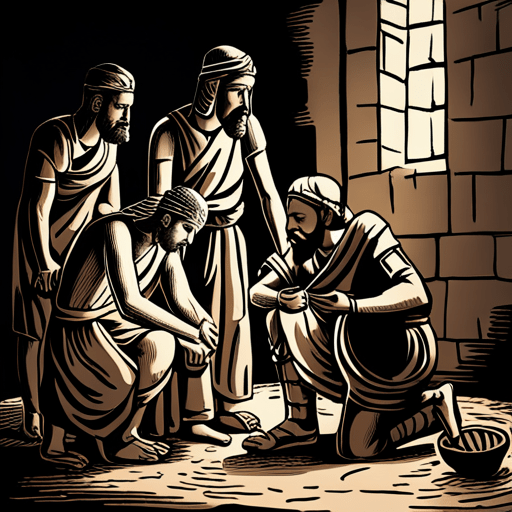
Joseph was released from prison and cleaned up. Pharaoh said he heard Joseph could interpret dreams, but Joseph said it was not him, but God who could. So, Pharaoh told Joseph about his dreams.
Then Joseph explained that God is showing Pharaoh what he is about to do. Both dreams mean the same. Seven good years were coming that would be followed by seven years of famine, a famine that would devastate the land.
Joseph then continued by making a suggestion that Pharaoh should appoint a wise man to appoint officials to collect 1/5 of the produce for the seven good years and store this grain. This would then provide food for the seven years of famine.
This made sense to Pharaoh, so he appointed Joseph as that leader. Joseph would be second only to Pharaoh.
Pharaoh put his ring on Joseph’s finger and clothed him with fine clothing. Then the people kneeled before Joseph. Joseph was given a wife too.
All this happened when Joseph was 30 years old. And Joseph did as he had suggested, saving up grain for seven years.
Joseph had two sons before the famine. Both of their names revealed that Joseph had forgotten all his troubles and recognized God had blessed him.
Then, the famine came and Joseph used the store grain to feed the people. And people from outside of Egypt came there to buy grain too.
Step 4: Interrogate the Passage
Questions you and your family ask might include:
- Was Joseph asked for advice after interpreting the dreams or did he offer that on his own?
- Was it uncommon for a non-Egyptian to be placed into such a high position?
Step 5: Wonder about the Passage
Wonder statements you and your family make might include:
- I wonder how badly the cupbearer felt at having forgotten Joseph.
- I wonder if Joseph was nervous or afraid before Pharaoh.
- I wonder if Joseph’s advice was given hoping Pharaoh would make him that leader.
- I wonder what it was like for Joseph to go from the prison to second in command in one day.
Connect the Passage to Christ
Step 6: Find the World in Front of Text
Once again, the larger story around Joseph reminds us of how the world is broken. Imprisonment and famine were not part of God’s design. But once again, we see God in the middle of the story, providing hope for those who seek to honor him. That’s one thing we cannot miss about this story: how often Joseph refers to God. He was quick to explain God interprets dreams, giving him the credit instead of taking it for himself. And he was just as quick to explain the abundance and famine is what God was going to do and how God had given Pharaoh his dreams. Pharaoh didn’t miss this. Joseph also recognized what God had done when he named his two sons. Joseph knew that God had brought good from all his troubles.
In this, we see that Joseph is relying on God, which is probably why Joseph was able to do something impressive in this story—something that isn’t said in the text, but its absence cannot be missed. When Joseph became second in charge of the land, he could have sought to punish the cupbearer for forgetting him. But he didn’t. It seems that Joseph forgave the cupbearer, even if his forgetfulness had caused Joseph to stay in prison for two more years. But, based on Joseph’s statements when he named his sons, it seems Joseph understood that he was released in God’s timing. Who knows if Pharaoh would have cared two years earlier? God was moving and he was moving in his perfect time.
Step 7: Find the World of Jesus of the Text
Joseph gives us a hint of how God wants us to live with forgiveness. Joseph was wronged time and time again, but he also showed the ability to forgive time and time again. He didn’t go after the cupbearer, or even Potiphar and his wife, as he might have been allowed to do by Pharaoh. Instead, it seems he forgave. And we’ll see him do the same next time when Joseph is restored with his brothers. In this, Joseph points to Jesus, the one who provided forgiveness of our sins and who suffered and died for us, wrongly crucified on our behalf.
Translate It to Your Context
Step 8: Connect the World of Jesus of the Text to Your World
Who do you need to forgive? Who has wronged you in a big way or a small way that you can truly forgive? How can you let that person know they are forgiven? Who might you ask to forgive you for something you’ve done wrong?
NEXT: Act 3: God Promises Jesus; Scene 24: Joseph and His Brothers Reunite (Genesis 42:1—45:28; 50:15–21)
Learn more about this family discipleship method here.





 brian dembowczyk