TLDR:Jesus is fully God and fully human, both being true without any mixture or compromise of either nature. This is a driving truth in teaching about Jesus, setting up the critical teaching of Jesus being the perfect substitute for our sin.
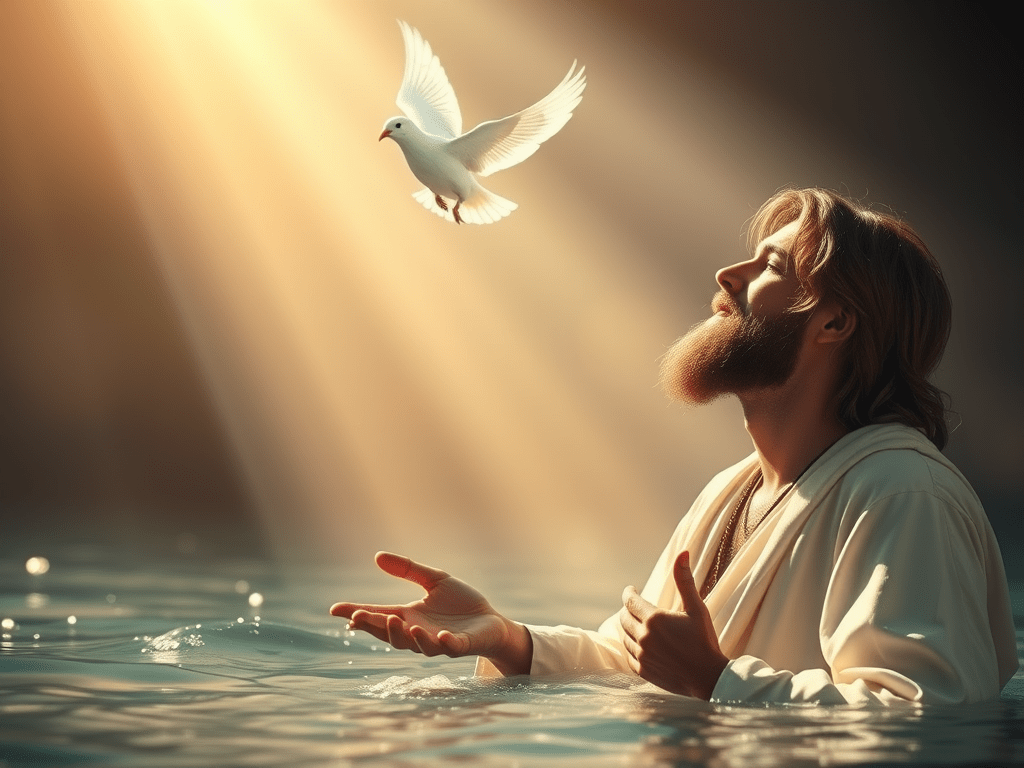
The name Jesus doesn’t appear in the Bible until the New Testament (although Joshua, basically the Hebrew version of that name, does).1 Because of this, some people think that Jesus didn’t exist until he was born in Bethlehem around 6–5 BC. But that’s not correct. Jesus is the Son of God, which means he’s fully God, and that means he’s eternal. This is the important point the apostle John wanted to make as he opened his Gospel account: “In the beginning was the Word [Jesus], and the Word [Jesus] was with God, and the Word [Jesus] was fully God” (John 1:1, NET). The manger in Bethlehem wasn’t where Jesus came into being; it was where the eternal Son of God, wrapped in human flesh, came into the world.
As we teach children about Jesus, a field of theology called Christology, we need to be sure to keep Jesus being both fully God and fully humanat the front of our minds. There’s a mystery to it, for sure. The idea of God becoming human and being limited as a person is a head-scratcher. But it’s critical that we help our kids understand that Jesus is, always has been, and always will be fully God, and then two thousand years ago, he became fully human. If we remove or reduce either, we don’t teach who Jesus really is. He isn’t God who is kind of a human; neither is he a human who is kind of God. He’s the God-man. One hundred percent God; one hundred percent human. We might not be able to understand how both these truths fit together (a doctrine called the hypostatic union), but our job is to teach that they both are true.
But there’s another critical truth about Jesus to proclaim to our kids: why he became human in the first place. We find the answer in 2 Corinthians:
God made the one who did not know sin to be sin for us, so that in him we would become the righteousness of God.
2 Corinthians 5:21 (NET)
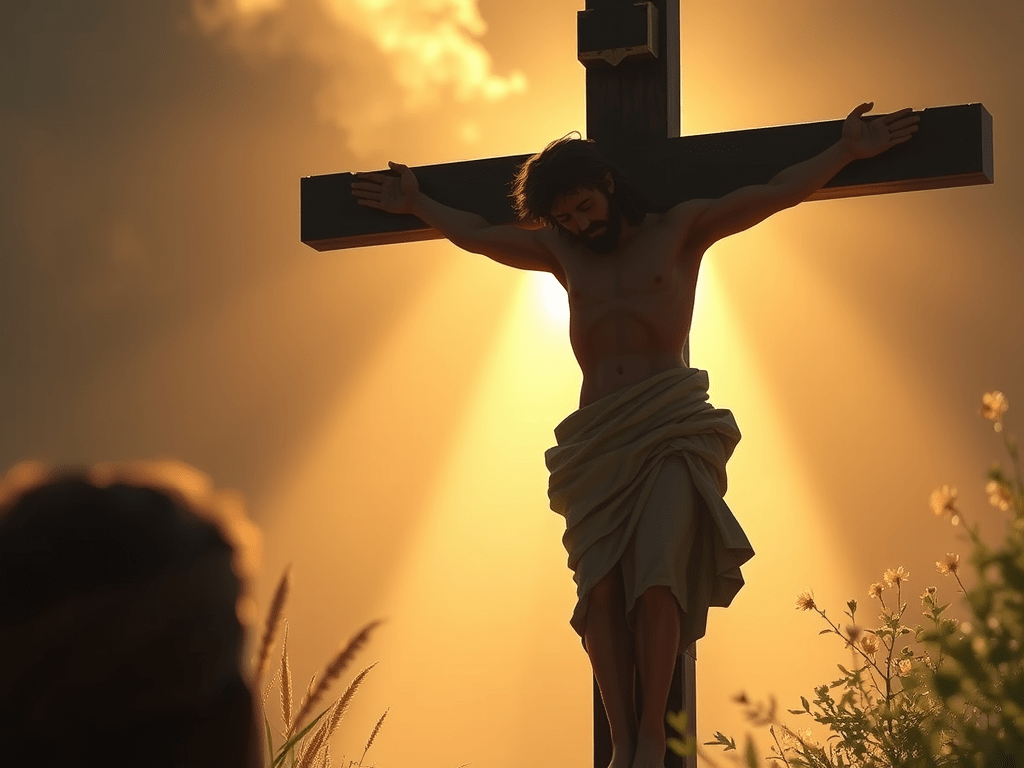
Human sin has earned human death. This is why the sacrifice of bulls and goats went on and on without end. An infinite amount of bull and goat blood could not provide the eternal covering for even a single sinful person. And this is why the Son of God took on flesh, becoming fully human, so that He could take our sin debt upon Himself on the cross to cover it for good.
This is why the Son of God came to earth as a baby. Jesus lived about thirty years without sinning even once so that he would be the perfect substitute for us. In doing so, Jesus also provides a picture of what it looks like to be the perfect human—to live as the perfect image of God. Our children have been made in God’s image, and Jesus shows them what it looks like to live that out. The same is true of us, of course. In the end, as we teach our kids about Jesus, we don’t just target how they can experience new life in him, but we also target how they can live new life through him.
If you are looking for a resource to help you grow as a theologian and to help you teach your children theology, Faith Foundations is for you.These ninety-nine devotions use an ancient tool called a catechism to teach the core doctrines of the faith. Each devotion features a Bible reading, a devotion, several engaging questions, a Jesus connection, and a suggested family activity. Faith Foundations is now available for purchase.
The first two paragraphs of this blog post is a slightly adapted excerpt from Faith Foundations. (Brian Dembowczyk, Faith Foundations: 99 Devotions to Help Your Family Know, Love, & Act Like Jesus. Downers Grove: IVP, 2025.) ↩︎
TLDR: Helping a child to understand who God is can be more challenging that you might think. We can make the mistake of oversimplifying a theology of God and we can make the opposite mistake of overcomplicating it. The best approach is right in the middle.
At first glance, defining God can seem like we’re trying to define blue.1 God is just God, right? That’s true to a point. Even God has defined himself this way. In the Old Testament, one of the most common Hebrew names for God is Yahweh, which is often translated as “LORD” (with small capital letters O, R, and D to make it stand out from “Lord,” which translates something else). Yahweh basically means “I am” or “I exist” (see Exodus 3:14). So, when Moses asked God this very question—who are you?—God’s response was simply “I am God.” But God didn’t define himself only in this way in the Bible. He also gave us many other names (e.g., Elohim, Adonai, El Shaddai) and characteristics (e.g., loving, faithful, just) to know him by.
How, then, do we begin to define God for a child? Do we take the way that seems overly simple, or the way that seems overly complex? Perhaps the best approach is in the middle: focusing on an overarching description that is unique to God—a description that provides glimpses of his other important characteristics but that is simple enough for our kids to get their arms around. A description like this: God is the creator and ruler of all things. This is basically how God chose to introduce himself to us in Genesis 1. It’s simple enough, but it hints at several important undergirding truths. God is immensely powerful; he must be to make everything by speaking. He is unique; he alone isn’t created. He has all authority; that means he makes the rules for how everything works, including us. And he loves us and wants to know us; that’s the very reason we exist.
The Example of the Ten Commandments
A great way to see how we can communicate about God is to see how he did it himself through the Ten Commandments. The law that God gave to his people through Moses wasn’t just to guide them for how they were to live (that was indeed a large part of it), but it was also to introduce them to who he is. The ancient Hebrews weren’t just forging a new nation; they were forging a new relationship with a God they had not known in Egypt.
Don’t miss what God does in the preface of the Ten Commandments:
God spoke all these words:“I, the Lord, am your God, who brought you from the land of Egypt, from the house of slavery.”
Exodus 20:1–2 (NET)
Before getting to what he expected of his people, God first reminds them of what he has done. He has delivered them from bondage and he had done that in a powerful way.
Then, as we consider each of the Ten Commandments, we are drawn to learn something about God:
You shall have no other gods (Exodus 20:3). God is unique.
You shall not make any idols (Exodus 20:4–6). God cannot be contained.
You shall not take the Lord’s name in vain (Exodus 20:7). God is weighty.
You are to remember the Sabbath (Exodus 20:8–11). God is our rest.
You are to honor your parents (Exodus 20:12). God is our heavenly Father deserving of honor.
You are not to murder (Exodus 20:13). God is the source of life.
You are not to commit adultery (Exodus 20:14). God is our sole love.
You are not to steal (Exodus 20:15). God provides all we need.
You are not to give false testimony (Exodus 20:16). God is true.
You are not to covet (Exodus 20:17). God is our greatest desire.
Each of these commandments expresses a way to live that aligns with God’s character. We obey the Ten Commandments not just because they were commanded, but also because they reflect God’s identity. We can’t miss how deeply intertwined this is. We teach our kids to know God so that they love Him but also so that they understand better how to live like Him—the very way they were made to live as His image bearers.
If you are looking for a resource to help you grow as a theologian and to help you teach your children theology, Faith Foundations is for you.These ninety-nine devotions use an ancient tool called a catechism to teach the core doctrines of the faith. Each devotion features a Bible reading, a devotion, several engaging questions, a Jesus connection, and a suggested family activity. Faith Foundations releases today and is available for purchase.
The first two paragraphs of this blog post are a slightly adapted excerpt from Faith Foundations. (Brian Dembowczyk, Faith Foundations: 99 Devotions to Help Your Family Know, Love, & Act Like Jesus. Downers Grove: IVP, 2025.) ↩︎

TLDR:A catechism is one of the greatest tools available in a family discipleship tool belt. This time-tested method of teaching theology involves a question and answer approach that not only communicates God’s truth, but also creates an environment for exploring the faith together as a family.
When many people think of a catechism, they think of guys like in this post’s feature image, which, by the way, is AI’s attempt at portraying Martin Luther. Catechisms are seen as relics of a past era, or they are perhaps associated with with certain faith traditions. But that’s about all many people know about them.
While it’s true that the heyday of catechisms was during the Protestant Reformation and the century that followed it, the history of catechisms actually stretches way back into biblical days. And while catechisms are indeed more popular with some faith traditions, their use spans nearly each one. The reason is simple: Catechisms are a tremendous discipleship tool for kids and adults.
What is a Catechism?
A catechism is a series of questions and answers concerning the basics of the faith that are meant to be recited and memorized. It comes from the Greek word katēcheō, which means to “teach by word of mouth” or “instruct.” This word is used seven times in the New Testament, most notably to speak of Apollos’s instruction (Acts 18:25), Paul’s desire to instruct others (1 Corinthians 14:19), and Paul’s command that those who receive instruction in the Word must share good things with those who teach it (Galatians 6:6).
Catechism Terms
The word catechism is a noun, describing the content of this question and answer instruction. Here are four other terms to be aware of:
Catechesis | The method of instruction
Catechumen | The recipient of instruction
Catechist | The giver of instruction
Catechize | The process of instruction
Popular Historical Catechisms
Again, catechisms can be dated back to biblical days, but they became quite popular during the sixteenth-century Protestant Reformation and into the seventeenth century. Here are a few of the more well-known catechisms:
The Small Catechism (1529) | Martin Luther (the real one, not the AI Martin Luther on this post) created this catechism intending it to be used by families.
The Geneva Catechism (1542) | John Calvin created this catechism also to be used by families.
The Heidelberg Catechism (1563)
The Westminster Shorter Catechism (1646) | This is perhaps the most famous of catechism, being a hallmark for many Presbyterians.
The Baptist Catechism (1677)
Example Questions and Answers
So, that’s a lot about catechisms, but you still might be wondering what one is like. Here are a few sample questions and answers to give you a feel for what the are and how they work:
WHO IS GOD? | God is our creator and he is the ruler of everything.
WHAT DOES IT MEAN THAT GOD IS OMNISCIENT? | That God is omniscient means he knows everything that was, that is, that will be, and that could be.
WHAT DOES IT MEAN TO HAVE A NEW IDENTITY IN CHRIST? | To have a new identity in Christ means the core of who we are has changed; we have been recreated to live the way God made us.
Often, the catechist reads the question, and then the catechumen responds by reading the answer or reciting it from memory. In this way, theological truths are embedded into the minds of everyone, and prayerfully, that truth works its way down into their hearts and onto their hands in daily life as well.
Catechisms and Family Discipleship
Like many people, I didn’t know much about catechisms until I was in seminary. I loved what I heard about them and immediately decided it was a tool I wanted to use with my young son. After looking at various catechisms, I couldn’t find one that I loved. There’s certainly an appeal to using a historic, tested catechism, but I wanted something more approachable and practical to use in my home.
So, I wrote one and used it for a while. That catechism was later expanded and published by B&H as Cornerstones. This resource became key for my family’s discipleship. During dinner, we’d randomly choose catechism questions to ask our three children. Not only did this help our kids learn the basics of the faith, but it provided a safe, fun, meaningful context for fantastic conversations as my kids would often want to go beyond the questions and answers. They wanted to know the why behind many of the truths, or they wanted to understand how they were strung together. I can say without a doubt that using a catechism fueled family discipleship in our home more than anything else.
That’s why I am grateful that IVP has published Faith Foundations, based on this catechism. I’ve seen this work firsthand, and believe it can work in other homes too.
If you are looking for a resource to help you grow as a theologian and to help you teach your children theology, Faith Foundations is for you.These ninety-nine devotions use an ancient tool called a catechism to teach the core doctrines of the faith. Each devotion features a Bible reading, a devotion, several engaging questions, a Jesus connection, and a suggested family activity. Faith Foundations releases October 21, 2025 but you can preorder a copy today.
A catechism, scripted questions and answers about the Christian faith, is one of the earliest and most successful discipleship tools we have in our ministry tool belt. This breakout provided on October 8, 2025 at the KidzMatter Conference in Evansville, Indiana, walks through a brief history of catechisms before considering how we can incorporate catechisms into our ministries.
Our calling is to point our kids to Jesus so they trust in Him and love Him. But that isn’t where our ministries end! We are also to help them live as disciples—to live boldly showing, and sharing the gospel with others. This breakout provided on October 8, 2025 at the KidzMatter Conference in Evansville, Indiana, walks through the who, what, where, when, how, and why of making this happen.
The Bible is at the center of all we do, so it’s helpful to know as much about it as we can. This breakout provided on October 7, 2025 at the KidzMatter Conference in Evansville, Indiana, covers how the English Bible came to us and its trustworthiness, why we have different English translations, strategies to consider when choosing or recommending a Bible, and questions you might have about the wonderful gift God has given us in the Bible.
We know that Jesus must be at the center of all we do in ministry, but how do we determine if truly He is? This breakout provided on October 7, 2025 at the KidzMatter Conference in Evansville, Indiana, explores what it means to be gospel-centered and how we can evaluate each of the key aspects of our ministry programs to see if Jesus is really at the center of it.
TLDR:Teaching theology is much like teaching math; you start with the basics and then build on them. As we teach a child theology, we start with the big ideas a child can handle, and then we build on them as the child grows and matures.
Theology is like math; it builds on itself. When you learn math, you start with the basics: numbers, addition, and subtraction. Then you move on to multiplication and division, which are based on addition and subtraction. After that, you progress to fractions, decimals, exponents, and algebra before moving on to higher math like geometry and calculus.
The Basics of Theology
Kids best learn theology the same way. We start with the basics, thinking in big categories like God, Jesus, the Holy Spirit, people, sin, salvation, the Bible, Christian living, the church, and last things. And then within those categories, we think of the bigger ideas, like God is Creator. God is good. God is love. These bigger ideas in these big categories make up the foundation of theology that we teach to a child.
If we are introducing a young child—say a preschooler—to theology, we would begin with simple words too. “God made everything” might be better than “God is Creator.” At the same time, if we were introducing an older child to theology for the first time, we would likely use the latter phrasing.
Building on the Foundation
From there we’d move toward precision and expansion of these core ideas. “God is Creator” might become “God is Creator of everything from nothing.” We could then add on key ideas like God created everything good, he created everything for a purpose, and he created people as the pinnacle of all he made.
From there, we’d begin to connect ideas. We might focus on why God made people, which would lead to the relationship we can have with God, which would lead to sin breaking that relationship, which would lead to Jesus being God’s provision to make things right again.
That’s the beauty of theology—it’s all interconnected. And because most kids are naturally curious, these connections offer amazing opportunities for us to share the gospel with our kids. So, don’t be afraid of the questions your child might ask. Each question is a yearning for knowledge and understanding. It’s okay if you don’t have all the answers; no one does. Instead, when your child asks you something you can’t answer, say so, but then make a plan to research an answer together.
Moving at Each Child’s Pace
While there are suggested benchmarks for what a child should be learning (like the Levels of Biblical Learning), keep in mind that these are general guidelines. Each child is unique. Some kids might take a little longer in general or perhaps in one area. Others might move more quickly. And it makes quite a difference when a child begins learning theology.
What matters most is that we move with the child, going at the pace they need. Learning theology is not a race! It’s a marathon. It’s a life-long pursuit of understanding God and His ways. Know that whatever foundation you lay with God’s help will be a solid foundation that He will continue building upon for the rest of your child’s life.
If you are looking for a resource to help you grow as a theologian and to help you teach your children theology, Faith Foundations is for you.These ninety-nine devotions use an ancient tool called a catechism to teach the core doctrines of the faith. Each devotion features a Bible reading, a devotion, several engaging questions, a Jesus connection, and a suggested family activity. Faith Foundations releases October 21, 2025 but you can preorder a copy today.
For the Church National Conference Breakout (September 30, 2025)
Family discipleship isn’t flourishing in the United States. The data continues to affirm this, and anyone in ministry knows this to be true from observing their families struggle in this area. The truth is that family discipleship has never flourished in America.
This breakout provided on September 30, 2025 at the For the Church National Conference in Kansas City, Missouri, explores one of the main reasons why—too few families have a clear goal in mind and heart—and offers some possible solutions centered on helping kids come to know Jesus, trust in Jesus, and live like Jesus.