TLDR: A list of books to consider reading if you’re in kids ministry.
UPDATED: 1-18-25
There are a lot of great books for Kids Ministry leaders to read. Then, there are some not-so-great ones too. Below is a list of books to consider whether you’re new in ministry or a seasoned veteran. Not all are about kids ministry specifically, but they certainly apply. Some aren’t even directly ministry-related, but I believe they surely connect. Some, like Who Am I?, Created in God’s Image, and Who God Says You Are are included because ministry leaders need to have our identities properly grounded.
If you have any suggestions for books to add, I’d love to hear from you.
Book cover images come from Amazon.com.
LEADER DEVELOPMENT
Barton, Ruth Haley. Strengthening the Soul of Your Leadership: Seeking God in the Crucible of Ministry. Downers Grove, IL: InterVarsity Press, 2018.
While many leadership books focus on character and even more on competency, this is one that that focuses on the soul. Or, to put it another way, this book is not written primarily for the head or hands, but rather for the heart. Each chapter includes a spiritual practice to move what you read deeper within.
Bonem, Mike and Roger Patterson. Leading from the Second Chair: Serving Your Church, Fulfilling Your Role, and Realizing Your Dreams. Fortress Press ed. Minneapolis, MN: Fortress Press, 2020.
I’m not sure if there is a single kids ministry leader or even a family ministry leader who is the leader in a church. Rather, the position is almost always in a “second chair,” if not often in a third, fourth, or fifth one. As such, being comfortable and content in your role, building healthy relationships with your leader or leaders, and learning how to “lead up” are critical skills.
Bridges, Jerry. Who Am I? Identity In Christ. Adelphi, MD: Cruciform Press, 2012.
One common trap that ministry leaders fall into is placing their identity in their ministry role. They see themselves primarily as a “kids pastor” or “family pastor” often even beyond “wife/husband,” “mother/father,” and even child of God. Books like this one will not connect directly to ministry, but they are critical to keep you grounded in who you truly are.
Elmore, Tim, and Andrew McPeak. Marching Off the Map: Inspire Students to Navigate a Brand New World. Atlanta, GA: Poet Gardener Publishing, 2017.
While this book targets what students face more than kids, we know that (a) things are accelerating meaning what students faced in 2017 when this was written is likely on our kids’ radars today and (b) when it comes to technology especially, our kids are surely oversaturated. This is a book that will help us find ways we should consider adapting to connect better with kids today who are very unlike kids even ten years ago.
Greear, J.D. Gospel: Recovering the Power that Made Christianity Revolutionary. Nashville, TN: B&H Publishing, 2011.
This book has nothing to do with kids ministry and family ministry, and yet it has everything to do with kids ministry and family ministry. If we are going to build our ministries on the gospel and teach our kids the gospel, we need to be sure we know what that gospel is. In some ways, this word has lost meaning because of overuse. This is a book that will help you remember what it truly is all about.
Gawande, Atul. The Checklist Manifesto: How to Get Things Right. New York, NY: Metropolitan Books, 2009.
Not only is this not a kids ministry book, it’s not a ministry book at all. It’s a “business” book, but it’s one that every leader should read. Most kids ministry leaders tend to be uber organized, so many will read this less to learn from and more to affirm their wiring. But there will still be ways to grow from it. And for those who struggle with organization, buy this today.
Hoekema, Anthony A. Created in God’s Image. Grand Rapids, MI: William B. Eerdmans Publishing Company, 1994.
This is another book that doesn’t address kids ministry or ministry directly, but needs to be read to keep us grounded. This is the best book I have read on what it means to be made in God’s image.
Kruger, Melissa, ed. Identity Theft: Reclaiming the Truth of Our Identity in Christ. Deerfield, IL: The Gospel Coalition, 2018.
This is a book written by women and the intended audience is women. But it shouldn’t be. This is a fantastic and important book for all believers. Add this to the list of books that speak more to the leader himself or herself and not to ministry. This one explores ways we lose sight of our identity.
Rosner, Brian S. Known by God: A Biblical Theology of Personal Identity. Grand Rapids, MI: Zondervan Academic, 2017.
Yet another book that concerns who we are as followers of Christ rather than speaking to kids ministry. Seeing a pattern? Can you tell what I think is most vital for a flourishing ministry? What I love about this book is that in it we chase down a beautiful but oft neglected truth of being known by God. Knowing God is amazing for sure. But being known by God is even more incredible.
Sanders, J. Oswald. Spiritual Leadership: Principles of Excellence for Every Believer. Chicago, IL: Moody Publishers, 2007.
If you could only read one book on leadership, this should be it. This book focuses on the character of the leader and is packed with wisdom. I know of people who read this annually. It’s not a bad idea.
Smith, Christian, and Melinda Lundquist Denton. Soul Searching: The Religious and Spiritual Lives of American Teenagers. New York, NY: Oxford University Press, 2005.
The data about the spiritual condition of teens may be dated, but this is still a must-read. In fact, the data is worse now, so the startling conclusions then are even more sobering today. This book is also where the term “moralistic therapeutic deism” was coined.
Snodgrass, Klyne R. Who God Says You Are: A Christian Understanding of Identity. Grand Rapids, MI: Eerdmans, 2018.
Another outstanding book on finding our identity in Christ. Once again, if we do this and build our lives and ministries on that core identity, we will serve more faithfully, more joyfully, and more meaningfully.
Tripp, Paul David. Lead: 12 Gospel Principles for Leadership in the Church. Wheaton, IL: Crossway, 2020.
If Spiritual Leadership didn’t exist, this would be the best ministry leadership book out there. Like Sanders’ book, this one focuses on the character of the leader.
MINISTRY AND ORGANIZATIONAL PHILOSOPHY
Adams, Steve. Children’s Ministry on Purpose: A Purpose Driven Approach to Lead Kids toward Spiritual Health. Grand Rapids, MI: Zondervan, 2017.
This is a strong book to add to a leader’s collection. Notice what I said there. This is best read as one among several books that advocate for a certain philosophy/structure of ministry. It’s not that this one has problems, it’s just that ministry is not one-size-fits-all. So one huge mistake to avoid is reading one book, taking it as gospel, and then implementing it without question or at least adaptation. My suggestion is get several books that advocate various positions and “Frankenstein” your own ministry.
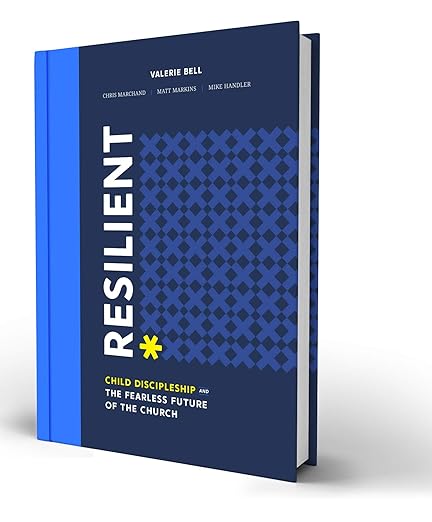
Bell, Valerie, et al. Resilient: Child Discipleship and the Fearless Future of the Church. Marceline, MO: Walsworth Publishing Company, 2020.
The premise here is simple, but critically important: we cannot do ministry today like we have always done it. Indeed, one of the mistakes we often make is we fail to disciple our kids in our ministries. We do a host of other things, but we don’t disciple. This book advocates that we build our ministries on the 3 B’s: Belonging, Believing, and Becoming. How you do it might take different forms, but those three elements must be present in a ministry that truly disciples kids.
Cimo, Pat and Matt Markins. Leading KidMin: How to Drive Real Change in Children’s Ministry. Chicago, IL: Moody, 2016.
This book provides practical wisdom in various topics within kids ministry, including how to cast vision, how to align with the larger church and work with a lead pastor, and how to discover your leadership approach.
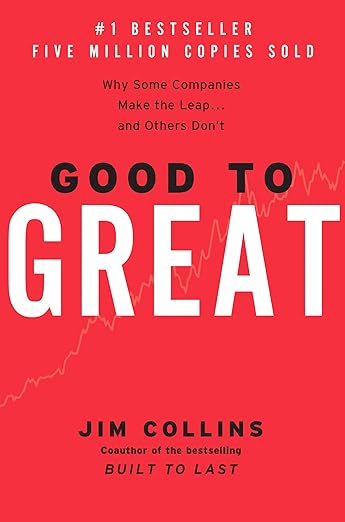
Collins, Jim. Good to Great: Why Some Companies Make the Leap…and Others Don’t. New York, NY: HarperBusiness, 2001.
It might seem odd of me to consider a book like this a must-read in kids ministry, but if you’ve ever read it, you likely know why. This. is a business book through and through. But there is gold to mine in it that we can apply to our ministries and leadership. The “Stockdale Paradox” alone is worth the read.
Dembowczyk, Brian. Gospel Centered Kids Ministry: How the Gospel Will Transform Your Kids, Your Church, Your Community, and the World. Nashville, TN: B&H Publishing, 2018.
Call me a homer. OK. But I wrote this book to help ministries and I believe it does that. One criticism I’ve heard about it is that it doesn’t get practical enough. Fair. My hope though is that it sparks thinking and provides at least a map for leaders to find their own path toward application in their context.
DeVries, Mark and Annette Safstrom. Sustainable Children’s Ministry: From Last-Minute Scrambling to Long-Term Solutions. Downers Grove, IL: InterVarsity Press, 2018.
This is a good partner book with Children’s Ministry on Purpose. Like that one, this one cannot stand alone. It presents a solid approach to ministry, but it. is just one approach with pros and cons.
Frank, Ryan. The KidzMatter Playbook. Marion, IN: KidzMatter Publishing, 2025.
The KidzMatter Playbook reads like the Book of Proverbs; it isn’t a long read, but it’s packed with nuggets of practical wisdom for ministry. In it, three foundations of a healthy and growing ministry are shared: (1) A Healthy Leader, (2) A Passionate Team, and (3) Robust Systems.
Hamilton Jr., James M. What Is Biblical Theology: A Guide to the Bible’s Story, Symbolism, and Patterns. Wheaton, IL: Crossway Books, 2014.
The Bible tells one story of God’s plan of redemption through Jesus Christ. If we’re going to teach kids the Bible accordingly, then we need to really understand this story arc the best we can. This is a wonderful book to help you do just that and thus build your ministry on the gospel story.
Joiner, Reggie. Think Orange: Imagine the Impact When Churches and Families Collide. Colorado Springs, CO: David C. Cook, 2009.
“And.” That’s the core message of this book. We need to see how God has teamed together the church and the home. It’s not either-or. It’s both-and. Just as yellow and red make orange, the church and home working together is God’s design for discipling the next generation.
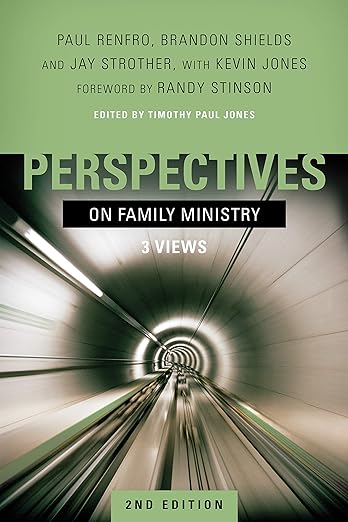
Jones, Timothy Paul, ed. Perspectives on Family Ministry: 3 Views. Nashville, TN: B&H Academic, 2009.
Few would say that churches shouldn’t minister to families. But how we do that is debated. Should we keep families together? Should we focus on training parents? Should we focus on discipling kids? I love these perspective books because they let advocates make their own case and then address concerns of the other positions.
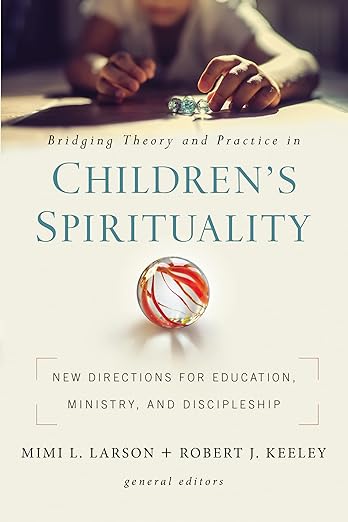
Keeley, Robert J., and Mimi L. Larson, eds. Bridging Theory and Practice in Children’s Spirituality: New Directions for Education, Ministry, and Discipleship. Grand Rapids, MI: Zondervan, 2020.
This is the most academic of books on the list, but don’t let that either intimidate you or drive you away. This book explores some important issues. Not every chapter will relate to you and your context, so skip those. It’s still worth it for. the ones left.
Kennedy, Jared. Keeping Your Children’s Ministry On Mission. Wheaten, IL: Crossway, 2022.
In “Keeping Your Children’s Ministry On Mission,” Jared Kennedy does a marvelous job of providing keen theological teaching as it relates to children’s ministry alongside practical wisdom. As it is, this book will reach up highly and spend time in the philosophical sphere of ministry, but it does that without missing practical everyday application. This is an important book for those who, like the title suggests, are in more of a maintenance mode, but it is also a book that anyone starting a kids’ ministry or needing to overhaul a kids’ ministry needs to read.
Lencioni, Patrick. The Five Dysfunctions of a Team: A Leadership Fable. San Francisco, CA: Jossey-Bass, 2002.
You are likely part of two teams—your church leadership team and your ministry team. This book will help with both of those. This is another book that is not a ministry one, but rather a business one, but like the others on the list, there’s ample room for connecting it to your ministry.
Luce, Samuel and Hunter Williams. How to Teach Kids Theology: Deep Truths for Growing Faith. Greensboro, NC: New Growth Press, 2025.
There are plenty of books on theology and plenty of books on how to teach kids, but far too few books on how to teach kids theology. Sam and Hunter provide an important resource to help fill this void. Practical, accessible, and weighty, How to Teach Kids Theology will be a great help to the church and home.
Markins, Matt, Mike Handler, and Sam Luce. Forming Faith: Discipling the Next Generation in a Post-Christian Culture. Chicago, IL: Moody, 2024.
The core idea of Forming Faith is that far too many churches and homes are trying to disciple children in the wrong ways—indeed, many are failing to disciple all together. Backed by statistics and years of experience and guided by Scripture and wisdom, this is an important read for ministry leaders to help them consider not just what we do, but why we do it.
Miller, Vincent J. Consuming Religion: Christian Faith and Practice in a Consumer Culture. New York, NY: Continuum, 2005.
OK. This one could be just as academic as Bridging Theory, but it too is well worth the read. In this book, consumerism is explored in light of church. Not only will this give you help in looking out for this pattern in your kids, but it will also help you think about how you lead your ministry. We could be feeding this without realizing it.
Osborne, Larry. Sticky Teams: Keeping Your Leadership Team and Staff on the Same Page. Grand Rapids, MI: Zondervan, 2010.
If you could only read one book on teams, let it be this one. This book is written more for a lead pastor and some of. the topics might not relate as readily for that reason, but what can be directly applied or adapted to apply is some of the best wisdom on leading teams out there.
Peters, Chuck, Jana Magruder, and Stephanie Salvatore. Flip the Script: Disrupting Tradition for the Sake of the Next Generation. Nashville, TN: Lifeway Press, 2022.
This is another stat-driven book looking to help us consider why we do what we do but also how we are best to do it. My three friends do a great job of sharing how we cannot change the gospel we teach, but we need to be able and willing to change how we teach it.
Postman, Neil. The Disappearance of Childhood. New York, NY: Vintage Books, 2011.
This book was first released in 1996, but it is still a timely read. One of my discoveries that I made during my PhD. dissertation research was that childhood as we know it hasn’t always existed. The concept of childhood has changed and ebbed and flowed throughout history. It seems that we are watching it decline before our eyes. While this may seem like an odd inclusion for a ministry reading list, we need to understand how our culture sees kids, how our parents see kids, and how our kids seem themselves if we are going to minister to them.
Reju, Deepak and Marty Machowski. Build on Jesus. Greensboro, NC: New Growth Press, 2021.
This is a great book for new kids ministry leaders because it covers so many of the basics of ministry. But it’s also a great book for seasoned kids ministry leaders who need to brush up or who want to ensure they have well-designed holistic ministries.
Ripley, Jennifer S., James N. Sells, and Diane J. Chandler. Ministering to Families in Crisis: The Essential Guide for Nurturing Mental and Emotional Health. Chicago, IL: InterVarsity Press, 2024.
I wish we didn’t need Ministering to Families in Crisis, but I’m sure glad we have it. The difficult truth is that many of the families we serve are indeed hurting and in crisis. The problem is that many of us haven’t been trained how to respond. Instead, we often feel afraid or paralyzed, wanting to help but not knowing how. Ministering to Families in Crisis provides the theologically robust and practical guidance we need to love and care for our families.
Stinson, Randy, and Timothy Paul Jones, eds. Trained in the Fear of God: Family Ministry in Theological, Historical, and Practical Perspective. Grand Rapids, MI: Kregel Academic & Professional, 2011.
Like Bridging Theory, not every chapter of this book might connect with you. But there is plenty of “meat” in this book to sink your teeth into, even if you leave some scraps on the plate.
Wishy, Bernard W. The Child and the Republic: The Dawn of Modern American Child Nurture. Philadelphia, PA: University of Pennsylvania Press, 1967.
This is another fascinating book that looks how the concept of childhood developed and has changed. Like a couple others on this list, this book will not relate directly to a kids ministry, but it is extremely beneficial to know how childhood as we see it has not always existed. And in time, childhood as we know it right now will be no more. The changes might seem slow, but they’re actually happening at a faster pace than we might realize. This book is out of print as far as I know, so if you are able to snap one up, do so.


































 brian dembowczyk