TLDR: A guide for having a family discipleship time on Genesis 39–40 based on the ACT Bible Study Method.
Act 3: God Promises Jesus
Scene 22: Joseph in Prison
Genesis 39:21—40:23
Analyze the Passage
Step 1: Introduce the Passage
Genesis was written by Moses sometime between 1445–1405 BC to help the Israelites leaving Egypt understand their history with God. It’s one of the five books of the Law that Moses wrote, which we also call the Torah, or the Pentateuch, which means “five books.”
Today’s true story is one more that shows how difficult of a time Joseph had early in his life. He began as a favored son, then it was downhill from there as his brothers nearly killed him, but then sold him into slavery. Then, after doing nothing wrong, he was thrown into prison. And that’s where we pick up Joseph’s story today. This story is in Act 3: God Promises Jesus.
Step 2: Read the Passage
Step 3: Summarize the Passage
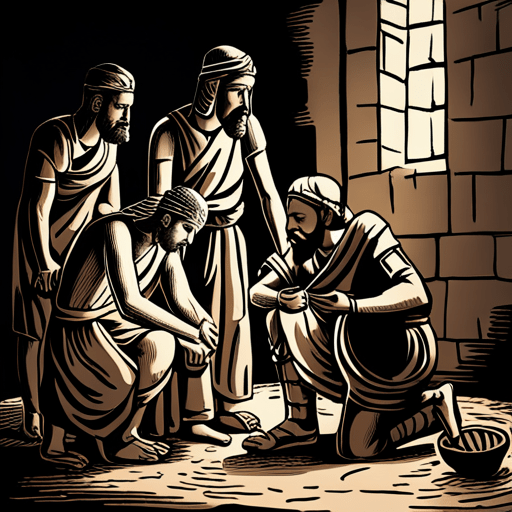
Even when Joseph was in prison, God was with him and continued to bless him. In time, Joseph became head over all the other prisoners.
Then, the Pharaoh’s cupbearer and baker made him unhappy, so he had them thrown into prison where Joseph was. Joseph was appointed to be their attendant.
One night, both the cupbearer and the baker had a dream. When Joseph saw them the next morning, he noticed they looked depressed and they told him it was because no one could tell them what their dreams meant. Joseph told them that God can provide an interpretation and asked them to tell him their dreams.
The cupbearer told him that in his dream, a vine grew with three branches and it budded into having grapes. Pharaoh’s cup was in the cupbearer’s hand so he squeezed the grapes and gave it to Pharaoh.
Joseph told him the dream meant that in three days, he would be restored as Pharaoh’s cupbearer. Then, Joseph asked that when that happened, that the cupbearer would speak favorably of Joseph to Pharaoh so that he might be freed.
Then the baker told his dream. In his, he saw three baskets of bread on his head. But the birds came and ate from the baskets.
Joseph told him that the dream meant that in three days, Pharaoh would have the baker beheaded.
Three days later, it was Pharaoh’s birthday and he gave a feast. He restored the cupbearer and executed the baker just as Joseph had said. But the cupbearer forget Joseph.
Step 4: Interrogate the Passage
Questions you and your family ask might include:
- What made Joseph successful in prison?
- Did Joseph know God could use him to interpret dreams before this?
- Why didn’t the cupbearer remember Joseph?
Step 5: Wonder about the Passage
Wonder statements you and your family make might include:
- I wonder if Joseph was tempted to become bitter at this point.
- I wonder what the cupbearer and baker did to make Pharaoh angry.
- I wonder how hopeful Joseph became when he knew the cupbearer would go before Pharaoh in just three days.
- I wonder if it was difficult to tell the baker about his dream.
- I wonder how long it took for Joseph to give up hope after the cupbearer was released.
Connect the Passage to Christ
Step 6: Find the World in Front of Text
This account is similar to ch. 39, where we see God bless and use Joseph, even in a difficult situation. But we also see Joseph directly trusting in God, when he asked to hear the dreams to interpret them. Before this, we read that God blessed Joseph and we saw Joseph did not want to sin against God, but here is where we see a hint of Joseph’s relationship with God. And it was likely this relationship that enabled Joseph to live as God wanted him to live—with ongoing humility and obedience.
God did not design this world to include brothers betraying a brother, slavery, lying, and imprisonment. But even as the world around Joseph was pretty much all it shouldn’t be, Joseph continued to live as it should be. And once again, we are given a snapshot of how we too can live in a broken world.
Step 7: Find the World of Jesus of the Text
Joseph’s humility and obedience point toward Jesus’ greater humility and obedience. Joseph was betrayed by his brothers and wrongly imprisoned, but held onto humility and obedience. Jesus was betrayed by his brothers and wrongly crucified, but he too held onto perfect humility and obedience.
Translate It to Your Context
Step 8: Connect the World of Jesus of the Text to Your World
How can you be especially humble this week? Remember, humility is not thinking poorly of yourself; it is thinking more highly of God and others. It is putting God first, others second, and yourself third. What are ways that you can display humility with your friends, family, and others to show them Jesus?
How can you obey God this week, in big ways and small ways, so that people might see Jesus in you? Think about all the places you will be this week and what you will do. How can you obey God and people he has placed in authority with joy?
NEXT: Act 3: God Promises Jesus; Scene 23: Joseph in the Palace (Genesis 41:1–57)
Learn more about this family discipleship method here.
 brian dembowczyk