TLDR: A guide for having a family discipleship time on Genesis 27–28 based on the ACT Bible Study Method.
Act 3: God Promises Jesus
Scene 14: Jacob Steals Esau’s Blessing
Genesis 27:1—28:9
Analyze the Passage
Step 1: Introduce the Passage
Genesis was written by Moses sometime between 1445–1405 BC to help the Israelites leaving Egypt understand their history with God. It’s one of the five books of the Law that Moses wrote, which we also call the Torah, or the Pentateuch, which means “five books.”
Today’s true story continues the story of Jacob and shows more of how he wasn’t the first person we’d choose to become the father of the twelve tribes of Israel. This story is in Act 3: God Promises Jesus.
Step 2: Read the Passage
Step 3: Summarize the Passage
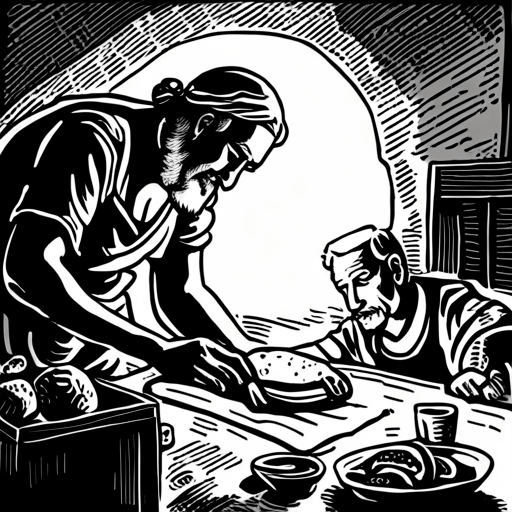
When Isaac was old and couldn’t see well, he called for Esau to hunt for some wild game, make him a meal, and bring it to him so that he could bless him. But Rebekah was listening and told Jacob to get two goats from the flock, and then she would make the meal and he would take it to Isaac to be blessed instead. Jacob asked about Esau being hairy, and Rebekah had him wear Esau’s clothes and put animal skins on his arms to appear to be hairy.
When Jacob, pretending to be Esau, took the food to Isaac, Isaac wondered how his son caught an animal so quickly, touched his arm, said the voice sounded like Jacob, and asked if it really was Esau. Jacob lied each time, and Isaac ended up blessing Jacob thinking he was Esau.
When Jacob left Isaac, Esau came in and they realized what had happened. Esau asked Isaac to bless him too, but Isaac could not. Esau became furious at Jacob for taking the birthright and now stealing the blessing. Esau hated Jacob and determined to kill him after Isaac died.
When Rebekah learned of Esau’s anger, she told Jacob that he needed to leave at once, going to Laban’s house to find a wife. So, Isaac agreed to send Jacob to Laban’s house to find a wife and Esau stayed there and married a Canaanite woman.
Step 4: Interrogate the Passage
Questions you and your family ask might include:
- What did it mean for Isaac to bless Esau?
- Why did Rebekah want Jacob to get the blessing instead of Esau?
- Was the blessing that Isaac gave part of the covenant God had made with Abraham?
- How did Rebekah hear of Esau’s anger?
- Why didn’t Isaac want his sons to marry a Canaanite?
- Why did Esau marry a Canaanite woman?
Step 5: Wonder about the Passage
Wonder statements you and your family make might include:
- I wonder what the meal was that Isaac liked.
- I wonder if Isaac ever really thought it was Esau with him the first time.
- I wonder if Jacob felt guilty as he was tricking his father.
- I wonder if Rebekah didn’t realize Esau would be so angry.
- I wonder if Isaac and Esau learned Rebekah had played a part in the trickery.
Connect the Passage to Christ
Step 6: Find the World in Front of Text
This is another story that shows us how the world is not like it is supposed to be. Here, we see a family torn apart because of the sins of favoritism, lying and deception, and anger. This is far from the world that God intends. He designed families, especially, to be filled with love, truth, and peace.
Step 7: Find the World of Jesus of the Text
This is a family that surely needed an infusion of forgiveness and generosity especially. Ideally, they would have put an end to the favoritism and trickery, but a heart of forgiveness would have also greatly helped them avoid the strife that plagued them for years after this. Jesus shows us the better way; a way that is marked by radical forgiveness.
Likewise, the family was greedy. Jacob wanted what wasn’t his, and his mother wanted it for him too. Instead, they should have been generous, giving what they had to support Esau. Jesus shows us a better way in this regard too, as he lived with great generosity for the good of others, not for himself.
Translate It to Your Context
Step 8: Connect the World of Jesus of the Text to Your World
Who do you need to forgive? Who has wronged you in a big way or a small way that you can truly forgive? How can you let that person know they are forgiven? Who might you ask to forgive you for something you’ve done wrong?
How can you be amazingly generous with someone this week to show them Jesus? Who might you be generous toward, how might you do it, and when might you do it?
NEXT: Act 3: God Promises Jesus; Scene 15: Jacob Has a Dream (Genesis 28:10–22)
Learn more about this family discipleship method here.
 brian dembowczyk