TLDR: A guide for having a family discipleship time on Genesis 18—19 based on the ACT Bible Study Method.
Act 3: God Promises Jesus
Scene 7: Sodom and Gomorrah
Genesis 18:1—19:29
Analyze the Passage
Step 1: Introduce the Passage
Genesis was written by Moses sometime between 1445–1405 BC to help the Israelites leaving Egypt understand their history with God. It’s one of the five books of the Law that Moses wrote, which we also call the Torah, or the Pentateuch, which means “five books.”
Today’s true story continues the story of Abraham, but it takes a slight detour. Instead of continuing to see what comes of God’s promise to provide Isaac, we return our attention to Lot and see what happens with him, and the unwise choice he had made to live in an ungodly place. This story is in Act 3: God Promises Jesus.
Step 2: Read the Passage
Genesis 18:1—19:29 [Note: consider paraphrasing 19:4–8, especially if you have younger children.]
Step 3: Summarize the Passage
Abraham saw three men and invited them to have a meal. Abraham had a meal prepared for his guests and they ate it together. The men asked where Sarah was told Abraham that she would have a son within a year. Sarah heard this and laughed, thinking she was too old.
The Lord asked why Sarah laughed; nothing is impossible for God. Sarah lied and said she did not laugh, but the Lord knew she had.
When the men got up to leave toward Sodom, the Lord decided not to hold back what was going to happen. So he told Abraham that Sodom and Gomorrah’s sins were great and he was going to confirm it.
Abraham asked if God would wipe out the city of 50 godly people were found. The Lord said he would not.
Abraham asked God if he would wipe out the city if 40 people were found. The Lord said he would not.
Abraham asked God if he would wipe out the city if 30 people were found. The Lord said he would not.
Abraham asked God if he would wipe out the city if 20 people were found. The Lord said he would not.
Finally, Abraham asked God if he would wipe out the city if just 10 people were found. The Lord said he would not. Then the Lord went on.
That evening, two angels visited Lot. Lot invited them to stay the night with him. Lot prepared a meal for them, and they ate. During the night, the men of the city came and wanted to sin against the two angels. Lot pleaded with them not to, but the men of the city insisted.
The men in Lot’s house pulled him safely inside, and then they struck the people of the city with blindness. The two visitors warned Lot to take his family and flee because God was about to destroy the city.
At dawn, the angels told Lot to flee. They then led them outside the city, and warned them to run and not look back. They were to escape to the mountains. Lot asked if they could go to a nearby town instead and the angels agreed.
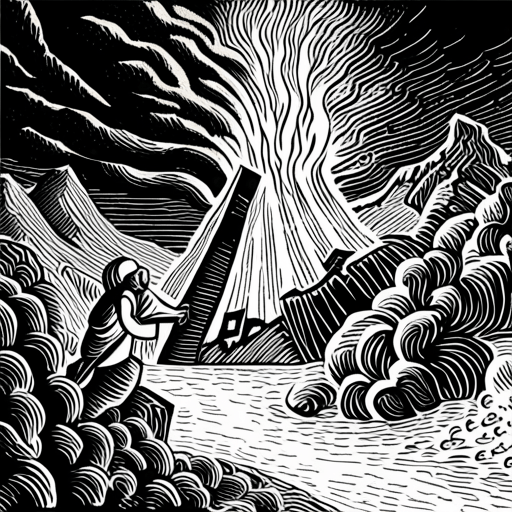
Then, the Lord rained sulfur and fire on Sodom and Gomorrah. But Lot’s wife looked back and was turned into salt.
That morning, Abraham saw the smoke coming from the cities. God had made good on his promise to do that, but also on his promise to spare Lot and his family.
Step 4: Interrogate the Passage
Questions you and your family ask might include:
- Who were the three men? The Lord and two angels?
- Why was Abraham so eager to provide a meal for the strangers?
- Why did Sarah laugh after what God had promised?
- Did God really not know how wicked Sodom was?
- Why was Abraham concerned for the city?
- Did Lot know the two were angels?
- Why was Lot so eager to provide a meal for the strangers?
- For teens/older kids: Why would Lot offer his daughters to the men of the city in that way?
- Why did Lot hesitate leaving?
- Why did Lot want to go to a nearby town instead of the mountains?
- Why couldn’t the angels do anything until Lot reached safety?
- Why did Lot’s wife long for Sodom?
- Why was Lot’s wife turned into a pillar of salt?
Step 5: Wonder about the Passage
Wonder statements you and your family make might include:
- I wonder what these three travelers looked like.
- I wonder how long it took Abraham, and Sarah to make the meal for their guests.
- I wonder how Abraham responded to the promise of a son.
- I wonder why the story mentions Sarah lying and the Lord correcting her.
- I wonder how large Sodom was that not even 10 godly people were in it.
- I wonder if the women in Sodom were as evil as the men.
- I wonder why the two sons-in-law didn’t take the warning seriously.
- I wonder what it looked like for fire and sulfur to rain from the sky.
- I wonder what it looked like for Lot’s wife to become salt.
- I wonder what Lot and his daughters thought and felt about Lot’s wife.
Connect the Passage to Christ
Step 6: Find the World in Front of Text
On the whole, this account shows more of like what God’s world shouldn’t look like. We have Sarah doubting God’s promise yet again. We have an unimaginably wicked city. We have Lot, willing to submit his daughters to terrible things. We have Lot’s wife disobeying a clear warning and looking back longingly at a wicked city being destroyed. But with all this wrong, there is surely some wonderful windows giving us a view of how God’s world is supposed to be.
We have the hospitality of Abraham and Lot toward the visitors. We have Abraham’s compassion for Sodom, doing his best to intercede for the city, even at risk of pushing God too far. But most of all, we see forgiveness in this story. That might sound odd in an account centered on the fiery destruction of two cities, but we can’t forget that Lot was not owed rescue, except for God determining to do that.
Lot doesn’t stand out as a hallmark of godliness. It starts with his desire to live near a wicked city, that, it seems, he at some point chose to live within. His offer of his daughters to the men of Sodom is unconscionable. Then, he lacked faith to flee to the hills as instructed, desiring to live near another city instead. But, God spared him and his daughters, reminding us of how amazing God’s grace and forgiveness is.
These widows of hospitality, compassion, and forgiveness give us a glimpse of how God designed his world to be.
Step 7: Find the World of Jesus of the Text
Abraham and Lot’s insistence on extending hospitality to apparent strangers is impressive, but not nearly as much as Jesus’ insistence on extending hospitality not just to strangers, but his adversaries too. Jesus even ate with the Pharisees—leaders who were out to get him. His love and desire to know people is what we are to imitate.
The compassion of Abraham and the forgiveness of God in this story also point us to the amazing compassion and forgiveness of Jesus. Just as Abraham interceded for the city out of his compassion, Jesus interceded for us out of his. And just as God extended amazing forgiveness to Lot, sparing him from destruction, Jesus has made the one and only way for us to be forgiven by God and spared from eternal separation from him.
Translate It to Your Context
Step 8: Connect the World of Jesus of the Text to Your World
How can you show someone hospitality this week? How can you treat someone with friendship, love, and kindness? Think about people who you know of or barely know, especially anyone who seems like he or she might need a friend. What will you do to be a friend to them?
How can you show others compassion this week? How can not only care about others, but act on that care by doing whatever you can for them, especially if they are in need. What can you do with your time, money, and possessions to help others in need?
Who do you need to forgive? Who has wronged you in a big way or a small way that you can truly forgive? How can you let that person know they are forgiven? Who might you ask to forgive you for something you’ve done wrong?
NEXT: Act 3: God Promises Jesus; Scene 8: Abraham and Abimelech (Genesis 20:1–18)
Learn more about this family discipleship method here.
 brian dembowczyk